





Thinking about starting solids with your baby soon? Long before the first spoonful of puree or soft BLW finger food, there are essential motor and sensory skills your little one needs to develop to ensure a safe, confident, and enjoyable feeding journey.
Caroline, our resident pediatric feeding expert, shares four practical, dietitian-approved ways to prepare your baby for solid foods weeks before mealtime begins.
1. Practice Sitting Up Unassisted
Ability to sit upright with minimal or no support is one of the single most critical readiness cues for starting solids. Strong trunk and core muscles are essential for maintaining an open airway, ensuring a safe swallow, and aiding proper digestion.
How to build core strength:
-
Practice short, supervised sitting sessions on a plush mat, carpet, or play rug.
-
Encourage upright posture during floor play using supportive play seats or your hands around their hips.
-
Start practicing early—consistent floor time builds steady muscle tone for the high chair.
2. Make Tummy Time a Daily Habit
Tummy time isn't just about rolling over—it is a foundational building block for eating! Daily tummy time strengthens the core, neck, and shoulder girdle. These same muscle groups provide the postural stability required for jaw control, chewing, and swallowing safely.
Key benefits of daily tummy time:
-
Builds postural stability for upright sitting in a high chair.
-
Strengthens head and neck control to prevent slumping during meals.
-
Exercises upper-body muscles used during self-feeding.
3. Encourage Tongue Lateralization Through Mouthing Play
Tongue lateralization is your baby’s ability to move their tongue side-to-side rather than just forward-and-back. This skill is critical for pushing food over to their gums for chewing and moving it to the back of the mouth for swallowing.
How to support oral-motor skills:
-
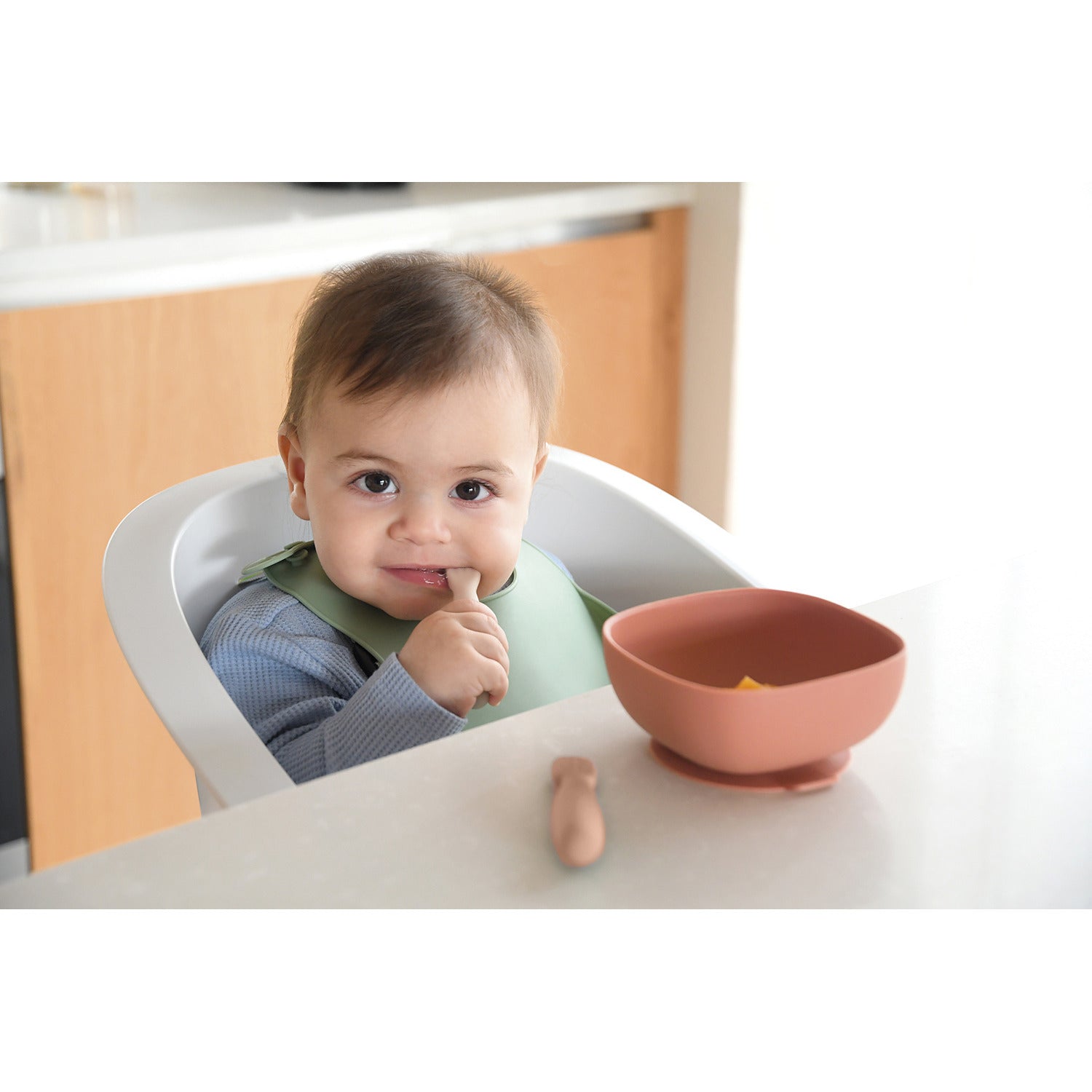
Offer safe, easy-to-grasp teether toys for active mouthing play.
-
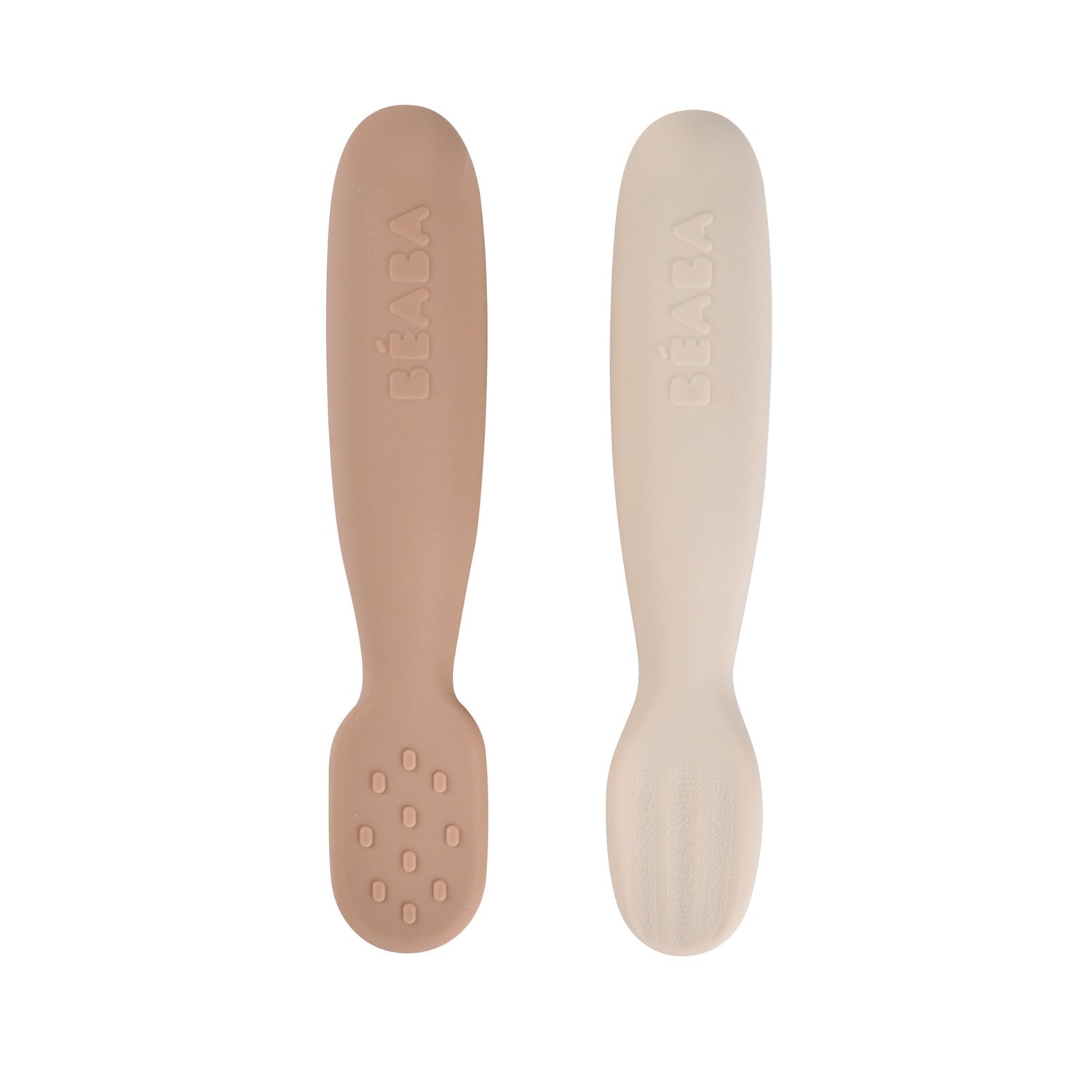
Choose long, slender teethers with textured tips that reach the back gums (similar in shape to BLW finger foods).
-
Let your baby explore these toys independently to build oral-spatial awareness and desensitize their gag reflex.
4. Model Eating and Engage Their Senses at the Family Table
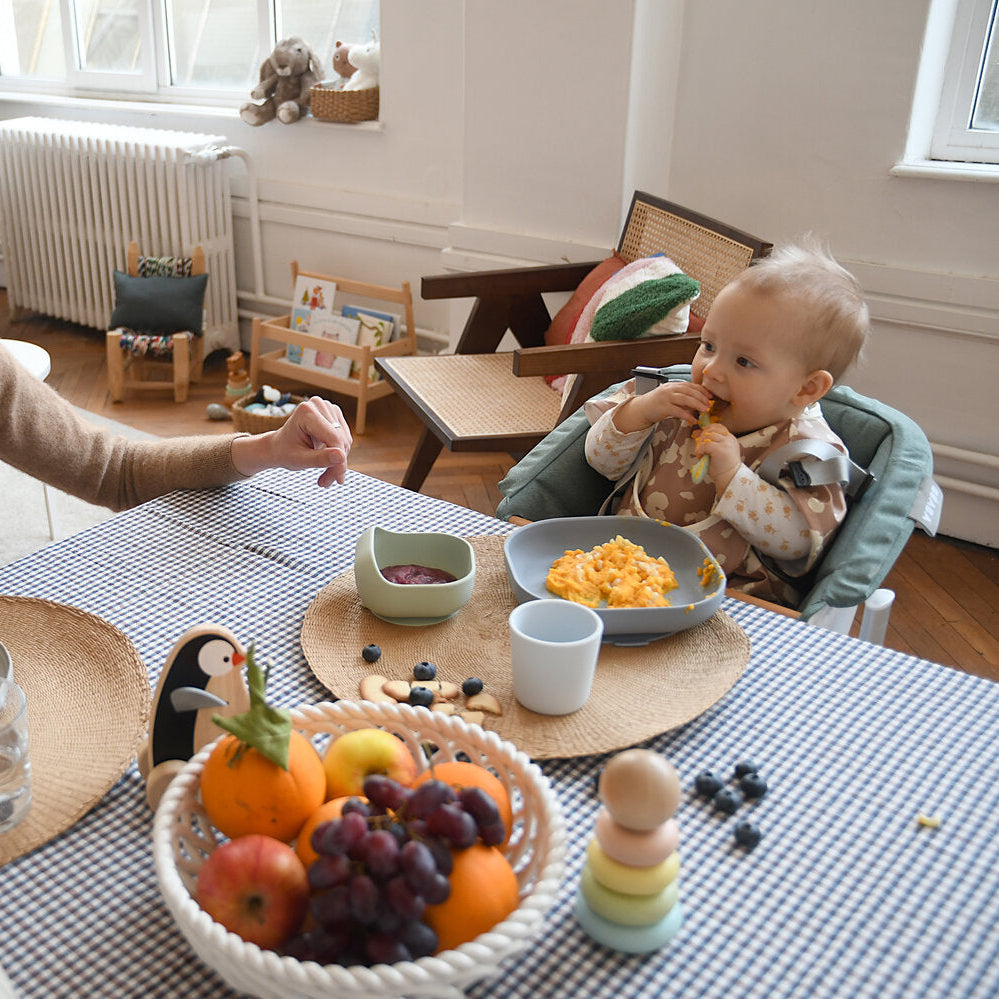
Babies learn by watching, and mealtime behavior is no exception! Bringing your baby to the dining table during family meals generates natural curiosity and builds positive associations with food long before their first bite.
Ways to engage their senses:
-
Seat baby at eye level during family mealtimes so they can watch you eat.
-
Use exaggerated chewing motions and expressive facial reactions to show how eating works.
-
Describe foods out loud—talk about colors, smells, temperatures, and textures to spark sensory curiosity.
Preparation Starts Early
Preparing your baby for solid foods doesn't begin on day one of feeding—it starts weeks in advance on the play mat! By focusing on core stability, oral-motor play, and sensory exposure, you lay the foundation for a seamless transition when your baby is ready for their high chair.